
Arthritis and Exercise: Why Movement Is One of the Best Ways to Manage Joint Pain
If you've ever been told you have arthritis, you're certainly not alone. Arthritis is one of the most common conditions people hear about as they age, and for many, that diagnosis comes with uncertainty. Questions like, "Should I stop exercising?" or "Am I making my joints worse by staying active?" are incredibly common.
The good news is that our understanding of arthritis has changed significantly over the years. While people were once encouraged to rest painful joints, current research consistently shows that exercise is one of the most effective ways to manage osteoarthritis—the most common form of arthritis. In fact, movement is now considered a cornerstone of treatment because it can reduce pain, improve function, and help people continue doing the activities they enjoy.
Arthritis Doesn't Mean You Should Stop Moving
One of the biggest misconceptions about arthritis is that painful joints are too damaged to exercise. Fortunately, that's not what the evidence tells us.
Osteoarthritis is a normal part of aging for many people, and it's important to remember that imaging doesn't always tell the full story. Many individuals have signs of arthritis on an X-ray but experience very little pain, while others may have significant discomfort despite only mild changes in their joints. Pain is influenced by many factors beyond what can be seen on a scan.
Rather than viewing arthritis as a reason to avoid activity, it's more helpful to think of it as a condition that benefits from regular, appropriate movement.
Why Exercise Helps

Exercise doesn't simply strengthen your muscles—it helps your entire body better support your joints.
Strong muscles act like natural shock absorbers, reducing the amount of force that reaches the joints during everyday activities like walking, climbing stairs, or getting up from a chair. Regular movement also helps reduce stiffness and keeps joints moving more comfortably throughout the day.
Exercise has another important benefit: it can improve how the nervous system processes pain. As people become stronger and more confident with movement, many notice that activities that once felt difficult become much more manageable.
Perhaps most importantly, staying active helps prevent the cycle that many people with arthritis experience: pain leads to less movement, less movement leads to weakness and stiffness, and those changes often contribute to even more pain. Regular exercise helps interrupt that cycle.
Will Exercise Make Arthritis Worse?
This is one of the questions we hear most often, and fortunately, the research provides a reassuring answer.
For most people with osteoarthritis, appropriately prescribed exercise does not accelerate joint damage. Instead, it consistently improves pain, mobility, strength, and overall quality of life.
That doesn't mean exercise should always feel completely pain-free. It's normal to experience some mild discomfort when beginning a new program or increasing activity. A helpful guideline is that any increase in soreness should settle within about 24 hours. If symptoms remain significantly worse the next day, it's usually a sign to reduce the intensity or volume and build back up more gradually.
The goal isn't to avoid all discomfort—it's to help your body become more resilient over time.
There Isn't One "Perfect" Exercise
Many people ask whether walking, cycling, swimming, yoga, or strength training is the best option for arthritis. The encouraging news is that research supports many different forms of exercise.
Walking, cycling, swimming, water-based exercise, balance training, Tai Chi, pilates, yoga, and resistance training have all been shown to improve symptoms when performed consistently. Rather than searching for the perfect exercise, it's often more important to find activities you enjoy and can maintain over the long term.
Consistency almost always matters more than choosing one specific type of exercise.
Why Strength Training Deserves Special Attention
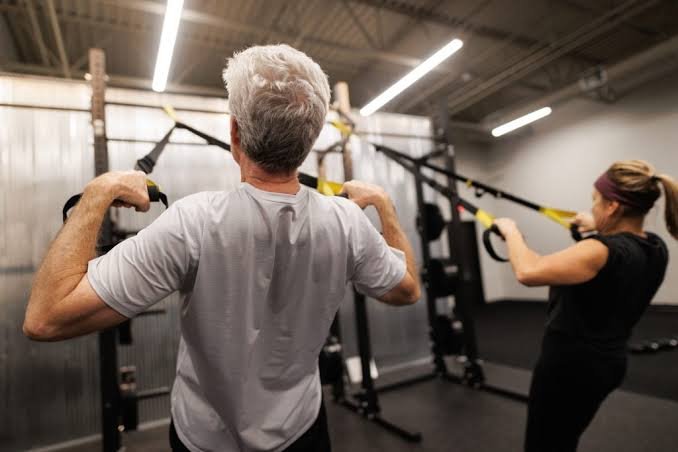
While many forms of exercise are beneficial, strength training deserves special recognition because of the significant improvements it can provide.
Building stronger muscles helps support the joints, making everyday movements feel easier and more comfortable. Many people notice improvements in activities like climbing stairs, standing up from a chair, carrying groceries, or simply walking longer distances with less discomfort.
Strength training doesn't have to involve heavy weights or complicated workouts. The most effective programs are those that are appropriate for the individual's current ability and gradually become more challenging as strength improves.
Challenging Common Myths
Unfortunately, many people still receive outdated advice about arthritis.
A common belief is that "bone-on-bone" joints mean exercise should be avoided. In reality, movement is one of the best tools we have for improving pain and maintaining function. Exercises can almost always be modified to suit someone's comfort level rather than eliminated entirely.
Another misconception is that pain always means damage. While sharp or severe pain should never be ignored, mild discomfort during exercise doesn't necessarily indicate harm. With osteoarthritis, pain is often influenced by joint sensitivity, muscle weakness, and how the nervous system responds to movement—not simply by the amount of wear and tear in the joint itself.
Understanding these differences can help people feel more confident about staying active.
The Bottom Line
An arthritis diagnosis doesn't mean you have to give up the activities you enjoy. In fact, current research consistently identifies exercise as one of the most effective first-line treatments for managing osteoarthritis.
The key is to choose activities you enjoy, progress gradually, and stay consistent. Whether that's strength training, walking, swimming, pilates, or another form of movement, regular exercise can help reduce pain, improve mobility, and maintain independence for years to come.
Movement isn't something to fear when living with arthritis—it's one of the most powerful tools we have to help manage it.
If you're not sure where to start or you've been avoiding exercise because of pain, you don't have to figure it out on your own. At Pure Movement, our team can help you find a safe, effective plan that fits your goals and your body. Whether you would benefit from physical therapy to address pain and improve movement, personal training to build strength and confidence, or a combination of both, we'll meet you where you are and guide you every step of the way.
If you're ready to move with more confidence and take control of your joint health, we'd love to help.