
What’s the Best Exercise for Building Bone Density? It Depends on Where You’re Starting
One of the most common questions we hear at Pure Movement is:
"What's the best form of exercise for building bone density?"
People are often looking for one answer. Should they lift weights? Start yoga? Take up pickleball? Go for walks? Begin jumping exercises?
The truth is that the research does show some forms of exercise are generally better for improving bone density than others. However, the exercise with the greatest potential to improve bone density isn't necessarily the best place for everyone to start.
At Pure Movement, we rarely prescribe exercise based solely on what the research says is "best." Instead, we focus on what is most appropriate for the individual sitting in front of us.
Because when it comes to bone health, there is no one-size-fits-all approach.
What Does the Research Say?
Bones adapt to the loads placed upon them. In general, higher mechanical loading tends to create a stronger stimulus for bone remodeling and bone density improvements.
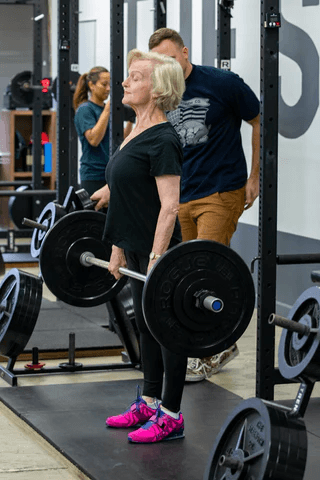
Multiple systematic reviews and meta-analyses have found that resistance training, impact exercise, and combined programs that include both tend to produce the greatest improvements in bone mineral density (BMD), particularly at the spine and hip.
A practical hierarchy of bone-building potential looks something like this:
Highest Potential
Heavy resistance training
Plyometrics (jumping, hopping, bounding)
Multidirectional sports (soccer, volleyball, basketball, tennis)
Moderate Potential
Running
Stair climbing
Recreational sports involving changes of direction
Higher-intensity weight-bearing exercise
Lower Potential
Yoga
Pilates
Tai Chi
Walking
Minimal Potential for Building Bone Density
Swimming
Cycling
This doesn't mean activities lower on the list have no value. In fact, many of them provide important benefits for balance, mobility, confidence, cardiovascular health, and fall prevention. It simply means that, from a bone-loading perspective, some activities provide a greater stimulus than others.
For example:
A 2020 systematic review found that combined exercise interventions and resistance training had positive effects on bone mineral density in older postmenopausal women.
A 2022 systematic review concluded that higher-intensity resistance training and combined training programs consistently improve bone density outcomes in older adults.
Recent network meta-analyses continue to rank resistance training and impact-based exercise among the most effective interventions for improving BMD.
So, if heavy lifting and jumping exercises generally work best, shouldn't everyone do them?
Not necessarily.
The Most Osteogenic Exercise Isn't Always the Best Starting Point
Consider these two individuals.
Person #1
72 years old
Diagnosed with osteoporosis
Sedentary for many years
No previous athletic background
Fear of falling
Difficulty getting on and off the floor
Person #2
68 years old
Diagnosed with osteopenia
Former soccer player and recreational tennis player
Previous strength training experience
Comfortable with impact and higher-intensity exercise
Would it make sense to give both people the same program?
Probably not.
The exercises that may be entirely appropriate for Person #2 could be overwhelming or intimidating for Person #1. Likewise, prescribing only walking and gentle stretching for Person #2 may not provide enough stimulus to meaningfully challenge their bones.
This is why exercise recommendations for bone health should always be individualized.
Why We Spend So Much Time Learning Your History
Before recommending an exercise program, we want to understand the whole person.
Your Bone Health
Normal bone density, osteopenia, or osteoporosis?
Previous fractures?
Vertebral compression fractures?
Current medications?
Your Exercise History
What activities did you do as a child?
Did you play sports?
Have you ever strength trained?
Have you practiced yoga, Pilates, running, or recreational sports?
Your Current Abilities
Strength
Balance
Mobility
Confidence with movement
Fear of falling
Pain and physical limitations
Your history matters.
The skeleton adapts throughout life, and previous movement experiences influence what your body can tolerate today. Someone who played multidirectional sports for years often has movement skills and impact tolerance that can make progressing into higher-level loading strategies much easier.
Conversely, someone who has never participated in formal exercise may need a very different entry point.
Sometimes Walking and Yoga Are the Right Answer
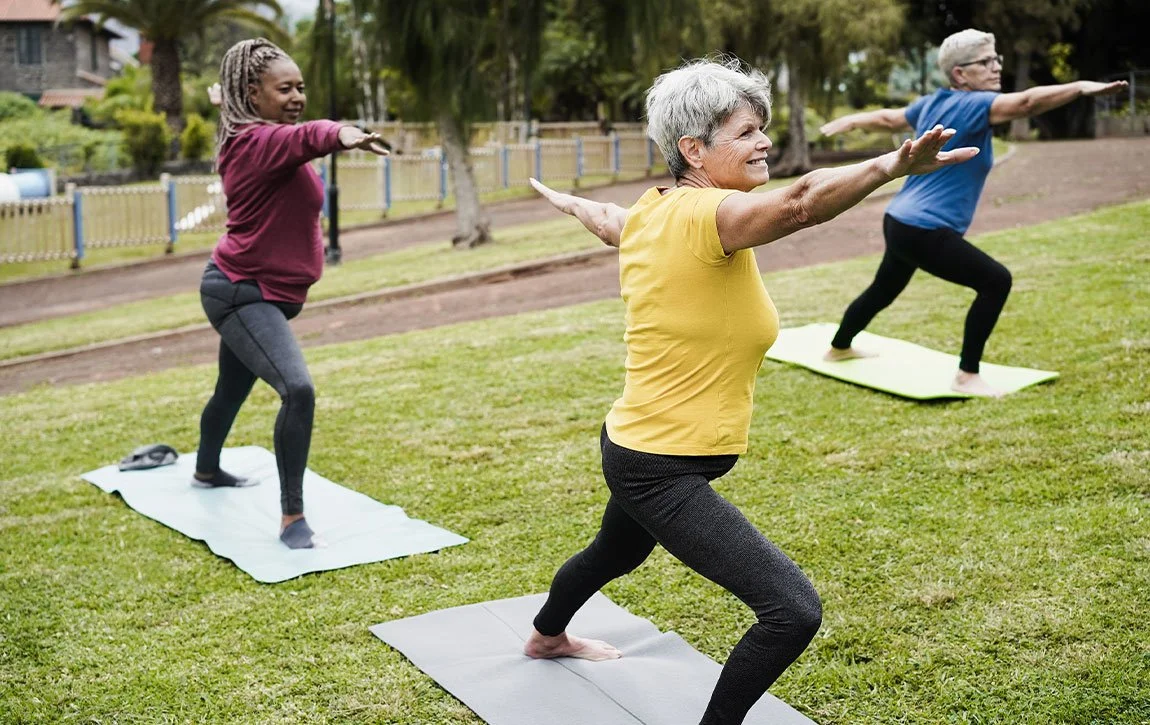
Walking and yoga are often criticized because they don't rank as highly as resistance training or plyometrics for increasing bone density.
But context matters.
Research generally shows that walking has relatively small effects on BMD compared to higher-impact activities. Similarly, studies on yoga have shown mixed results, with some small improvements in spinal bone density but less consistent findings than resistance training.
Yet for someone who has been sedentary for years, these activities may be exactly the right place to begin.
Walking can improve confidence, increase activity levels, and establish consistency. Yoga can improve balance, mobility, body awareness, and reduce fear of movement.
These qualities matter because fractures are influenced by more than bone density alone. Improving balance and confidence may reduce fall risk, which is a major component of fracture prevention.
Sometimes the best exercise isn't the one that creates the largest bone stimulus. Sometimes it's the exercise that gets someone moving consistently and builds the foundation for future progression.
Why We Often Prefer Resistance Training
If there is one form of exercise we frequently incorporate into our bone health programs at Pure Movement, it's resistance training. That's not because we believe everyone should be lifting heavy weights from day one or because resistance training is automatically the "best" exercise for every person. Rather, it's because resistance training is one of the most adaptable tools we have.
Almost every variable can be adjusted to meet someone where they are. We can change the exercise itself, the range of motion, the amount of support provided, the number of sets and repetitions, the load being lifted, the tempo, the rest periods, and how quickly the program progresses. This flexibility allows us to tailor exercise to the individual instead of trying to fit the individual into a predetermined program.
For one person, resistance training may begin with sit-to-stands from a chair, step-ups, or band exercises designed to build confidence and improve foundational strength. For another, it may include goblet squats, loaded carries, and deadlifts. Someone with a long history of athletics may eventually progress to heavier lifting and plyometric training.
Although the exercises may look very different, the underlying principle remains the same: provide the body with an appropriate amount of loading that challenges the bones and muscles while respecting the person's current abilities and experience.
This ability to individualize is one of the reasons resistance training is such a valuable tool for improving bone health. It allows us to start almost anywhere and create a clear path for progression over time.
Bone Health Is About Progression
One of the biggest misconceptions about exercise for osteoporosis and osteopenia is that everyone should immediately jump into the most intense exercises possible. In reality, bone health is less about finding the perfect exercise and more about finding the right level of challenge at the right time.
Bones respond to loads that are new and progressively challenging. However, what constitutes an appropriate challenge is highly individual.
For someone who has been sedentary for years, progression may simply mean moving from inactivity to regular walking, improving balance, and performing beginner strengthening exercises. For someone with previous athletic experience, progression may involve returning to heavier resistance training, incorporating impact activities, or participating in recreational sports.
Neither approach is inherently better than the other. They simply represent different points along the same continuum.
The goal is not to compare your starting point to someone else's. The goal is to continually move toward exercises that are slightly more challenging, build confidence, and provide an appropriate stimulus for adaptation. In many cases, the most effective bone health programs aren't built on dramatic changes but on consistent, progressive steps over time.
So, What's the Best Exercise for Building Bone Density?
The research tells us that some forms of exercise are generally more osteogenic than others. Resistance training, impact activities, and multidirectional sports tend to produce greater loading on the skeleton than activities like walking, yoga, swimming, or cycling.
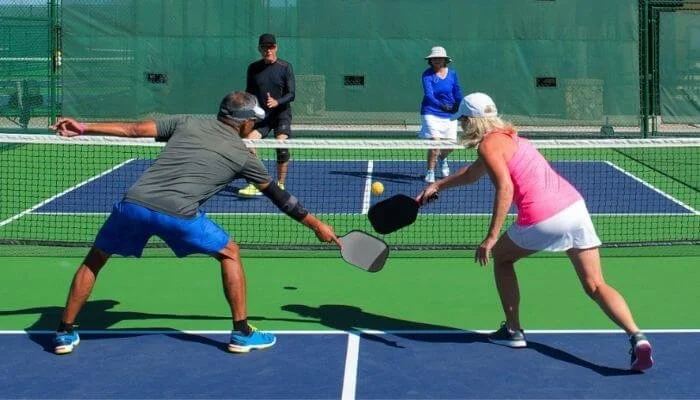
But research can only tell us what tends to work best on average. It cannot tell us where any one individual should begin.
The best exercise for building bone density is the most osteogenic activity that a person can safely and consistently perform based on their current bone health, physical capacity, confidence, and exercise history.
For some people, that next step may be walking and yoga. For others, it may be a structured resistance training program. For others still, it may include plyometrics, running, or returning to recreational sports.
There is no universal best exercise.
There is only the best next step.
At Pure Movement, our role is to help you identify that next step and create a plan that allows you to safely progress toward stronger bones, greater confidence, and long-term health. Because building better bones isn't about doing what is "best" on paper—it's about finding the right challenge for you and progressing from there.
Ready to Build Better Bones?
Improving bone health is about more than finding the "perfect" exercise. It's about finding the right starting point and progressing safely and effectively over time.
That's why we created our Building Better Bones Program at Pure Movement.
Our program includes:
Small-group classes focused on strength, balance, impact training, and confidence with movement.
One-on-one coaching for individualized assessment, exercise prescription, and progression.
Semi-private coaching that combines personalized programming with the support and accountability of a small training environment.
Whether you have normal bone density, osteopenia, or osteoporosis, our team will help you determine the best next step for building stronger bones and moving with confidence.
Ready to start building stronger bones? Contact Pure Movement to learn more about our Building Better Bones Program and discover the approach that's right for you.