
Recap of Our First Better Bones Coffee Meet-Up
Yesterday, we hosted our very first Better Bones Coffee Meet-Up at Pure Movement, and I want to extend a sincere thank you to everyone who attended.
It was a great morning filled with thoughtful questions, meaningful discussion, and a shared interest in staying active, independent, and healthy as we age. One of my favorite parts of the event was seeing people connect with others who have similar goals and concerns about bone health.
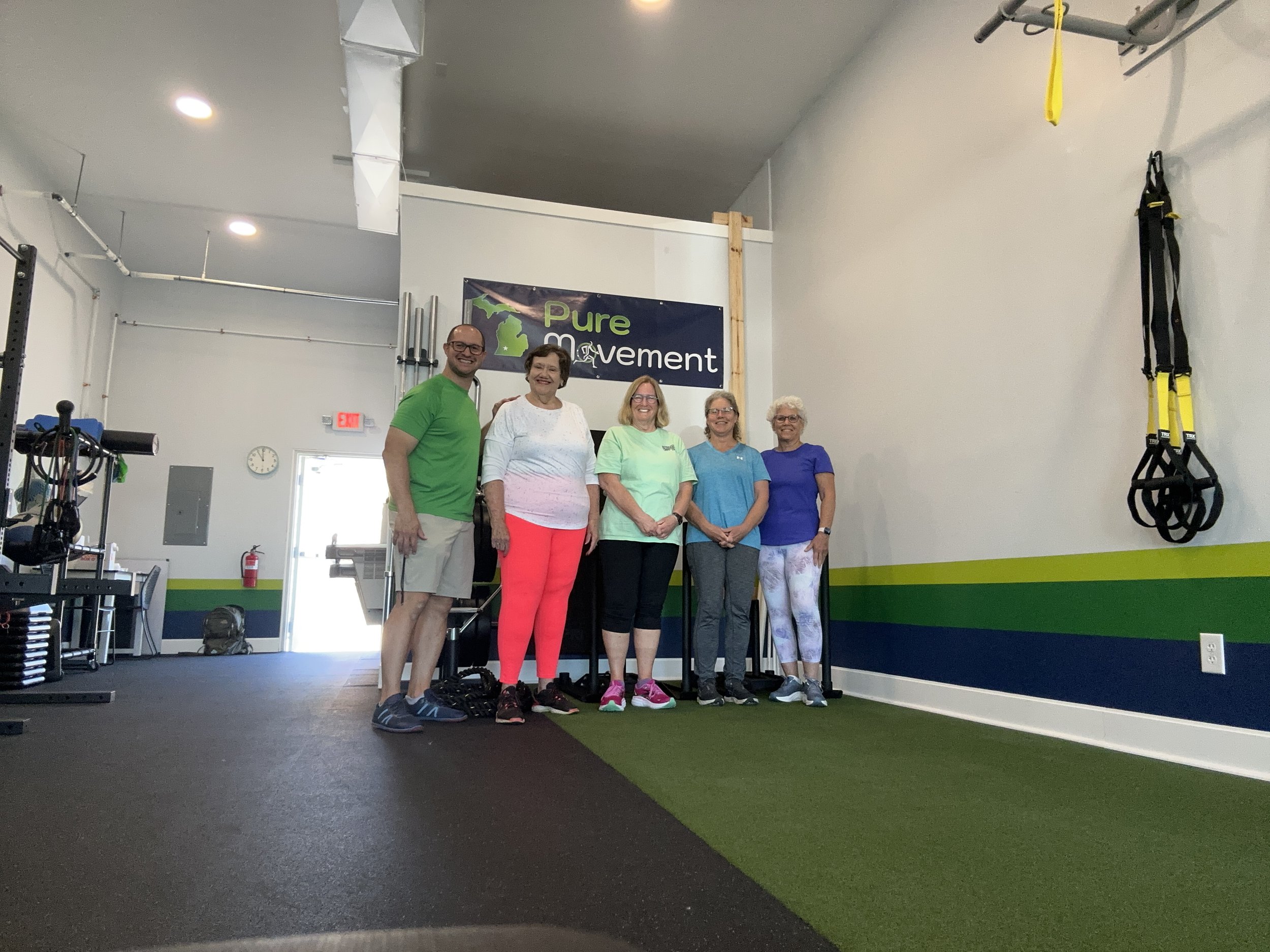
As usual, I got caught up in the conversation and forgot to take pictures until the very end. Unfortunately, several attendees had already headed out by the time I remembered! The group photo below includes some of the participants who were still around, but there were a few others who joined us that are not pictured here.
What We Covered
The topic for our first meet-up was:
What Actually Improves Bone Density?
There is a lot of confusion surrounding osteoporosis, osteopenia, and exercise. Many people have heard advice such as:
"Just walk more."
"Don't lift weights if you have osteoporosis."
"Bone loss is inevitable as you age."
During our discussion, we explored what current research actually tells us about bone health.
One of the key takeaways was that bones are living tissue. Throughout life, they continuously break down and rebuild themselves in response to the demands placed on them.
We discussed a concept known as Wolff's Law, which states that bones adapt to the stresses placed upon them. In simple terms, bones respond to challenge.
This led us to another important concept: loading.
Loading refers to the forces placed on bones through activities such as:
Carrying groceries
Climbing stairs
Strength training
Resistance exercise
Weight-bearing activities
While walking provides many health benefits, we discussed why walking alone may not always provide enough stimulus to significantly improve bone density. Strength training, balance exercises, and appropriately challenging movement often play an important role in supporting long-term bone health.
We also reviewed practical exercises that can help improve strength, stability, and confidence while reducing the risk of falls and fractures.
Why Bone Health Matters
When most people think about osteoporosis, they think about bone density scores.
But bone health is about much more than a number on a scan.
Strong bones support:
Independence
Confidence
Mobility
Balance
Quality of life
Maintaining bone health isn't just about preventing fractures. It's about continuing to do the things you enjoy for as long as possible.
Join Us for the Next Better Bones Coffee Meet-Up
I'm excited to continue this series and provide opportunities for education, discussion, and community around healthy aging. On Tuesday, June 30th at 10:00-10:45am, we will cover…
The Fall Prevention Formula: Building Power, Balance & Stability
During this meet-up, we'll discuss why many fractures occur because of falls—not just weak bones—and what you can do to improve your balance, reaction time, stability, and confidence in everyday life.
As always, we'll keep things relaxed, practical, and easy to understand.
☕ Coffee included.
👥 Small group discussion.
💬 Plenty of time for questions.
Whether you've attended before or this would be your first visit, we'd love to have you join us.
We look forward to seeing you on June 30th for another great conversation about staying strong, active, and independent for years to come.