
Breathing Life Back Into Your Core: The Missing Link in Midlife Pelvic Floor Health
Many women in midlife begin to notice subtle yet significant changes in their bodies — a softening of abdominal tone, an unexpected leak when sneezing or laughing, or a quiet sense that their core just doesn’t “work” the way it used to.
These experiences can feel frustrating and even isolating. But they’re not signs of weakness or decline — they’re messages from your body, asking for a new kind of attention.
The truth is, your breath may hold the missing link between strength, stability, and pelvic floor health. And the science supporting this connection is stronger than ever.
Your Core Is More Than You Think
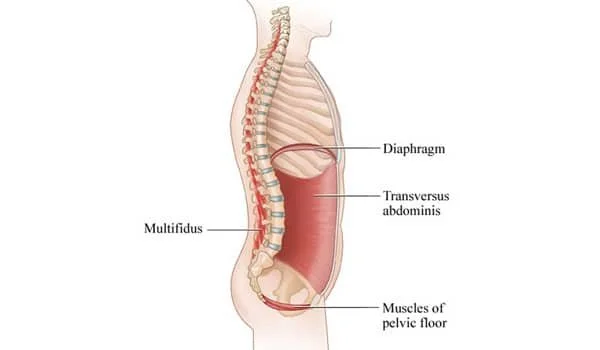
When we think about “core training,” most of us imagine crunches, planks, or tightening our abs. But your true core is a dynamic pressure system made up of the diaphragm (your main breathing muscle), deep abdominal muscles, back stabilizers, and the pelvic floor.
Every time you breathe, this system moves in a coordinated rhythm. On an inhale, the diaphragm descends and the pelvic floor yields slightly. On an exhale, both lift and stabilize together. It’s a beautifully synchronized dance that supports posture, balance, and continence.
According to Talasz et al. (2022), this breath–core–pelvic connection acts as “an integrated system for posture and continence control.” When breathing becomes shallow, or when we unconsciously hold the breath (as many of us do during stress), that harmony is disrupted — often placing excess pressure on the pelvic floor.
Learning to breathe with awareness can restore that coordination, allowing your inner support system to work as it was designed to.
Why Midlife Brings New Challenges
As women transition through peri- and post-menopause, hormonal shifts affect connective tissue, muscle tone, and fluid balance throughout the body — including in the diaphragm and pelvic floor.
Research from Sasirekha et al. (2021) shows that menopausal women who practiced diaphragmatic breathing alongside pelvic floor and core exercises reported improvements in urinary control, tissue comfort, and overall pelvic function.
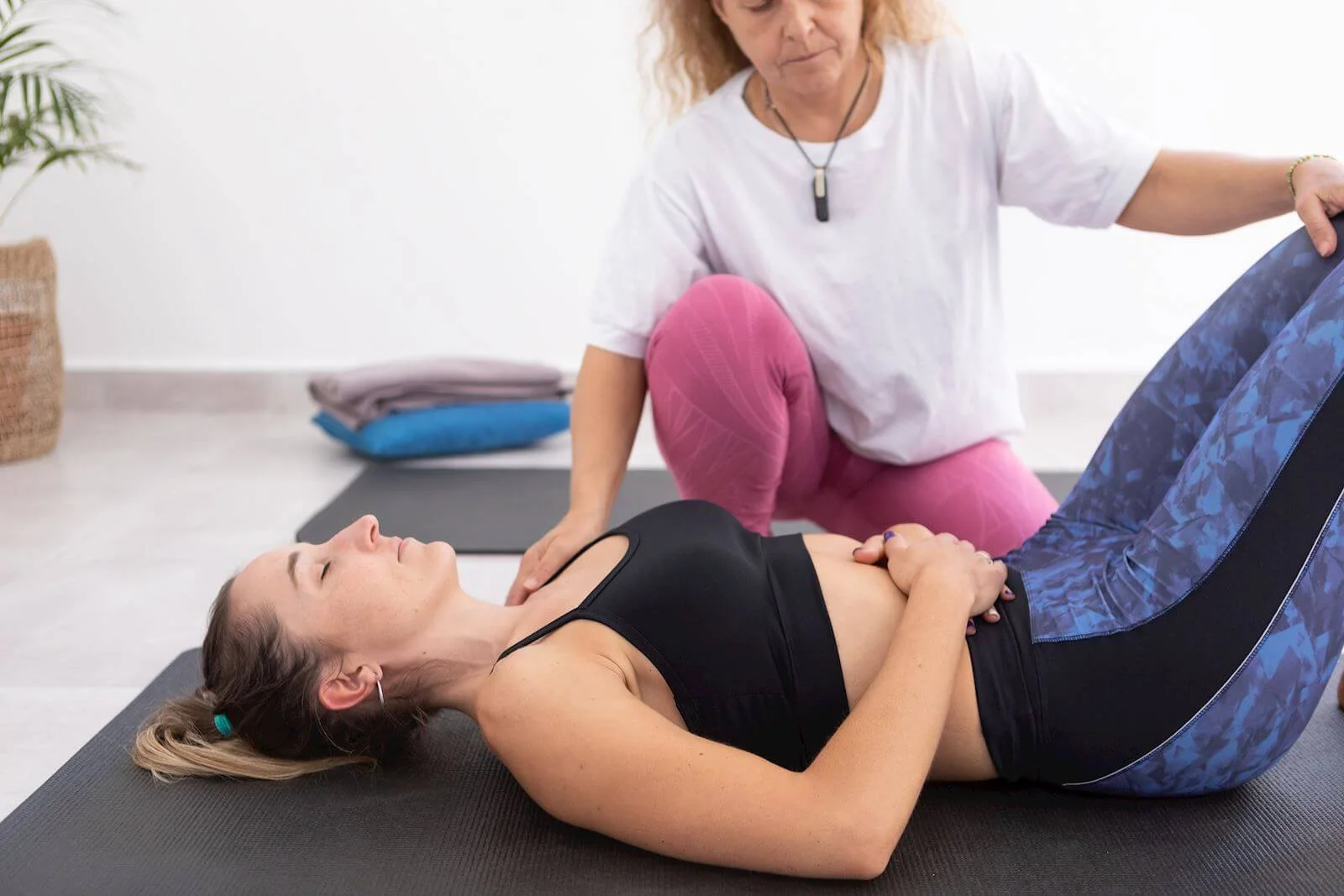
A comprehensive review by Bø et al. (2023) reinforces this: breathing-based approaches, when coordinated with pelvic floor activation, lead to greater functional improvements than isolated exercises alone.
In essence, the way you breathe during midlife matters. Stress, postural changes, and hormonal shifts can all alter breathing patterns — which in turn affects pelvic support. By relearning how to breathe with your core rather than against it, you can reduce internal pressure and restore balance.
Breath-Centered Movement: What the Research Reveals
Traditional pelvic floor training often emphasizes isolated contractions (“Kegels”). While helpful, these don’t always address how your body naturally coordinates pressure and movement.
A 2025 study by Rukavina et al. compared traditional pelvic floor exercises to a full-body approach integrating breathing and posture control. Women who practiced the integrated method experienced greater improvement in continence, movement efficiency, and body confidence.
Why? Because true core strength comes from timing, not tension. The diaphragm, abdominals, and pelvic floor must move together — not fight each other.
A few key takeaways from this research:
Exhale fully. A complete exhale naturally activates your deep abdominal and pelvic support.
Breathe with intention. Let your breath guide your posture and movement.
Integrate, don’t isolate. The most effective training connects breath, spine, and pelvic awareness.
This isn’t about pushing harder — it’s about moving with more intelligence and awareness.
Reconnecting With Your Core in Midlife
At Pure Movement, we view midlife as an invitation — not a setback. It’s a chance to rediscover how your body truly works and to move with deeper alignment, balance, and confidence.
Our professionals use breath-centered, evidence-based training that honors your body’s rhythms and supports the science of the inner core. Whether you’re navigating perimenopause, post-menopause, or simply seeking more connection, we focus on helping you build strength from the inside out.
You can start today:
Pause for a moment. Take a slow, full breath in through your nose. Feel your ribs expand.
Then exhale fully, allowing your ribs to draw inward and your pelvic floor to gently lift.
That simple movement is your body’s built-in support system — reawakening.
Reclaiming Strength from Within
Your breath is more than just oxygen — it’s the foundation of your core stability, pelvic health, and emotional balance.
Midlife doesn’t have to mean loss of strength or control. When you learn to breathe with awareness, you reconnect to the intelligent system that supports every move you make.
At Pure Movement, we’re here to guide that reconnection — through science, compassion, and mindful training that helps you breathe life back into your core.
Contact us today to learn how proper breathing & core training can enhance your quality of life. This can be achieved through one-on-one, semi-private, or small group training with our Breathe, Stretch, Grow class.
References
Talasz, H., Kremser, C., Kofler, M., & Rudisch, A. (2022). Breathing, (S) Training and the Pelvic Floor—A Basic Concept. Healthcare, 10(6), 1035.
Sasirekha, S., Anbupriya, M., & Prasad, E.M. (2021). Augmented Core Breathing Pelvic Floor Muscle Training for Patients with Genitourinary Syndrome in Different Phases of Menopause. International Journal of Physiotherapy Research.
Bø, K., Driusso, P., & Jorge, C.H. (2023). Can You Breathe Yourself to a Better Pelvic Floor? A Systematic Review.Neurourology and Urodynamics, 42(3), 512–523.
Rukavina, A.M.J., Andrijašević, M., & Kalafatić, D. (2025). Effects of a Newly Developed Body Technique Program vs. Pelvic Floor Muscle Training on Urinary Incontinence Outcomes in Middle-Aged Women. European Journal of Obstetrics & Gynecology and Reproductive Biology.