
During a recent conversation with a client, she mentioned she'd finally taken up pickleball with her neighbors — and then, almost as an afterthought, asked if she should be worried about getting hurt. It's a fair question. Pickleball has exploded across Portage and Kalamazoo over the last few years, and it's easy to see why: it's social, it's low-impact compared to running, and almost anyone can pick up a paddle and start playing the same afternoon.
But that accessibility is part of the story. According to PubMed, a 10-year analysis of U.S. emergency department visits found pickleball-related injuries rose sharply between 2013 and 2022, with the steepest increases among players over 65 (Yu et al., 2025). A separate study covering 2014 to 2023 found a similar pattern, with most injuries occurring in players aged 60 to 79 (McMillan et al., 2025). The good news is that most of what drives this trend is modifiable — and that's where strength and balance training comes in.
Why Falls Are the Real Story
It's tempting to picture pickleball injuries as paddle-to-wrist mishaps or overuse aches. Some of that happens. But across the research, falls are consistently the leading mechanism of injury, especially in older players (Yu et al., 2025; Okhovat et al., 2026). A 2026 systematic review pooling 15 studies found that lower extremity injuries — ankle sprains, fractures, and Achilles tendon injuries — are among the most common outcomes, and that falls and sudden directional changes are the primary culprits behind them (Okhovat et al., 2026).
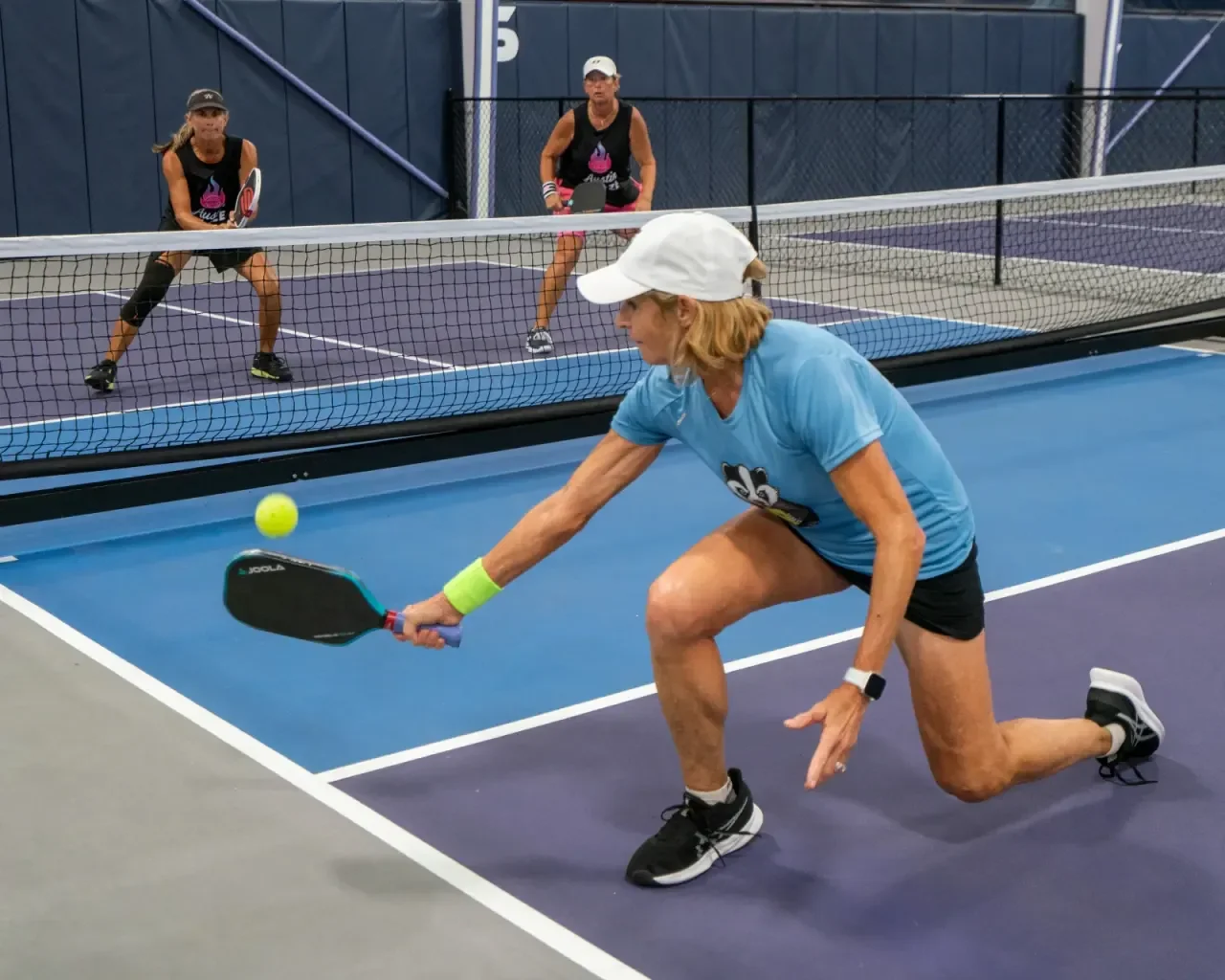
That directional demand is built into the sport itself. Pickleball's smaller court and the "kitchen," the no-volley zone near the net, force players into quick lunges, pivots, and abrupt stops in a confined space. If your balance, ankle stability, and leg strength haven't kept pace with those demands, your body is more likely to lose the fight against gravity mid-rally.
What the Research Says About Prevention
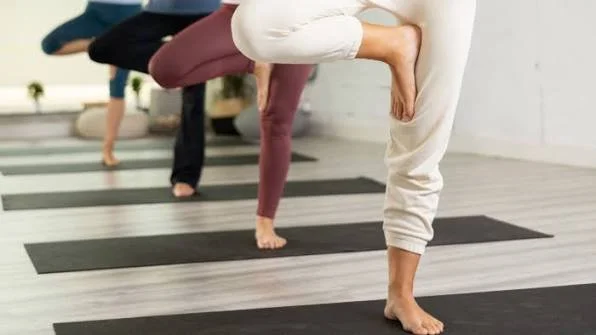
This is where it gets encouraging. The same 2026 review that identified falls as the dominant mechanism also laid out specific, modifiable risk factors — and matched them to practical countermeasures. Proprioceptive and balance training, done for 10 to 15 minutes two to three times a week, was linked to reduced fall and postural instability risk in players 50 and older (Okhovat et al., 2026). Neuromuscular ankle conditioning and a proper dynamic warm-up were both flagged as ways to reduce ankle inversion injuries specifically. This tracks with broader research on aging and balance.
A 2026 randomized controlled trial found that older adults who completed a structured resistance training program twice a week for 24 weeks saw meaningful improvements in mobility and balance confidence, regardless of whether mindfulness was added to the mix (de Amorim Batista et al., 2026). In other words, the training itself — not any single trick — is what moved the needle.
There's also a sex-specific piece worth knowing. Research shows women are more likely to sustain fractures, particularly of the wrist and hand, while men more often deal with strains, sprains, and lower-body injuries (McMillan et al., 2025; Okhovat et al., 2026). A Korean cross-sectional study of tournament players similarly found that injury odds climbed with weekly playing volume, suggesting that conditioning needs to scale up as play frequency does (Lee et al., 2026). None of this means pickleball is riskier for one group over another in some fixed way — it means the specifics of a good prevention plan should look a little different depending on who's playing and how often.
What This Means for You
None of this is a reason to stop playing pickleball. If anything, it's a reason to treat off-court preparation with the same seriousness you'd give your serve. A few sessions a week built around leg strength, single-leg balance work, and ankle stability can measurably change your odds — not eliminate risk entirely, but shift it meaningfully in your favor.
If you've been playing pickleball and want a training plan built around what your body specifically needs, we'd love to talk it through with you. A quick phone call is a low-pressure way to figure out whether small group training or one-on-one coaching makes more sense for your goals, your schedule, and your court time. You don't have to wait for an injury to start training smarter.
Bottom line: pickleball injuries are rising alongside the sport's popularity, but the research points to a clear, modifiable culprit — falls and instability — and a clear countermeasure: consistent strength and balance training.
Sources:
1. Yu J, Yendluri A, Linden GS, et al. "Increasing Incidence of Pickleball Injuries Presenting to US Emergency Departments: A 10-year Epidemiologic Analysis of Mechanisms and Trends." Orthopaedic Journal of Sports Medicine, 2025. https://doi.org/10.1177/23259671241305364
2. McMillan P, Lake LP, Burkhart A, Reddy E, Hale IC, Grawe BM. "The Epidemiology of Pickleball Injuries Presenting to US Emergency Departments." Sports Health, 2025. https://doi.org/10.1177/19417381251350671
3. Lee KJ, Jeong B, Nam SH, Lee RS, Heo J, Kim KM. "Prevalence and associated factors of pickleball-related injuries among Korean recreational players: a multi-tournament cross-sectional study." Frontiers in Public Health, 2026. https://doi.org/10.3389/fpubh.2026.1898734
4. Okhovat A, Ferkel E, Richards SA. "Lower Extremity Injuries in Adult Pickleball Players: A Systematic Review of Injury Types, Mechanisms, and Risk Factors." Cureus, 2026. https://doi.org/10.7759/cureus.10884
5. de Amorim Batista G, Nascimento VYS, Cavalcante BR, et al. "Does Adding Mindfulness to Instability Resistance Training Enhance Dual-Task Mobility and Fall-Related Outcomes in Older Adults with Motoric Cognitive Risk Syndrome? A Randomized Controlled Trial." Canadian Geriatrics Journal, 2026. https://doi.org/10.5770/cgj.29.945